
Addressing Adolescent Malnutrition in Tanzania: Unearthing the Promise of School-Based Solutions
Malnutrition during adolescence can have lifelong consequences. When young people do not get enough nutrients, their physical growth may be stunted, and their ability to learn and develop essential skills can suffer. At the same time, rising rates of overnutrition i.e., overweight and obesity can increase the risk of chronic diseases such as high blood pressure, and hypertension later in life. Deficiencies in important nutrients such as iron, can exacerbate these conditions, affecting energy levels, concentration and school performance – all which impact the future quality of life for youth. The severity of these challenges is often influenced by socio-economic conditions and environmental factors, such as rainfall patterns, which affect food availability and access.
In Tanzania, these forms of malnutrition co-exist. Adolescents aged 10 to 19 make up almost a quarter of the population and face different forms of malnutrition at once. Recent data shows that approximately 18% of teenage girls aged 15-19 are underweight, while 11% are overweight or obese (a figure that has doubled within the last 30 years); 42% of these girls also have iron-deficiency anaemia (TDHS 2015–2016; DHS 2022). Teenage boys experience a similar burden of malnutrition with about 10% who are underweight or iron deficient, and 15% who are overweight or obese (Mushengezi & Chillo, 2014; Pangani et al., 2016). Overall, these patterns reflect a complex problem that requires a multi-tiered solution to properly address all three forms of malnutrition in the country.
In 2025, Africa Academy for Public Health (AAPH) began a second wave of the research initiative called Meals, Education, and Gardens for In-School Adolescents (MEGA 2.0) whose goal is to develop a data-informed and sustainable solution to the malnutrition in Tanzania. This program is designed to go beyond one single intervention by developing a comprehensive school-based program that addresses the interconnected causes of malnutrition among secondary school students. The program is being implemented in collaboration with Harvard University, George Mason University and University of Dodoma.
Similar to the baseline round of study, MEGA 2.0 is being implemented in the Chamwino district of Dodoma, an area characterized by a semi-arid climate, frequent droughts and limited access to reliable food sources. Many of the households in this region face economic hardship, making it difficult to maintain consistent access to diverse and nutritious diets. The program is delivered through secondary schools, allowing it to reach adolescents consistently within their daily environment. If successful in this setting, the program could provide a model that can be adapted and scaled across other regions facing similar challenges.
The MEGA 2.0 Intervention Package
Mega 2.0 is built around five integrated components implemented in four secondary schools. The goal is to generate strong evidence for the effectiveness of a school-based nutrition intervention program over long periods of time. The intervention package includes:
- Mid-day school meals to support dietary needs and curb hunger during learning hours.
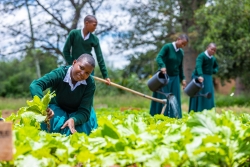
- School-based vegetable gardening to promote food literacy and sustainable nutrition practices for the community.
- Structured nutrition education sessions to promote key health and nutritional information.
- Women Empowerment Community workshops teaching agriculture, nutrition, and WASH (water, sanitation and hygiene).
- Weekly iron and folic acid (IFA) supplementation and deworming among adolescents.
To strengthen the evaluation of the program, two control schools are also included in this study. These schools do not receive any of the intervention package; however, they are provided with copies of the nutrition education materials and community workshop manuals, which may be used at the discretion of school administrators and teachers.
At AAPH, we see MEGA 2.0 as an important step toward building healthier communities. By combining nutrition, education, and community engagement, the program recognizes that lasting change happens when the whole community works together. The findings from this study will help us better understand not only what works, but also how such interventions can be effectively implemented in real-world settings in and beyond Tanzania.
Ultimately, investing in adolescent nutrition means investing in the future—healthier individuals, stronger communities, and a more resilient society.